
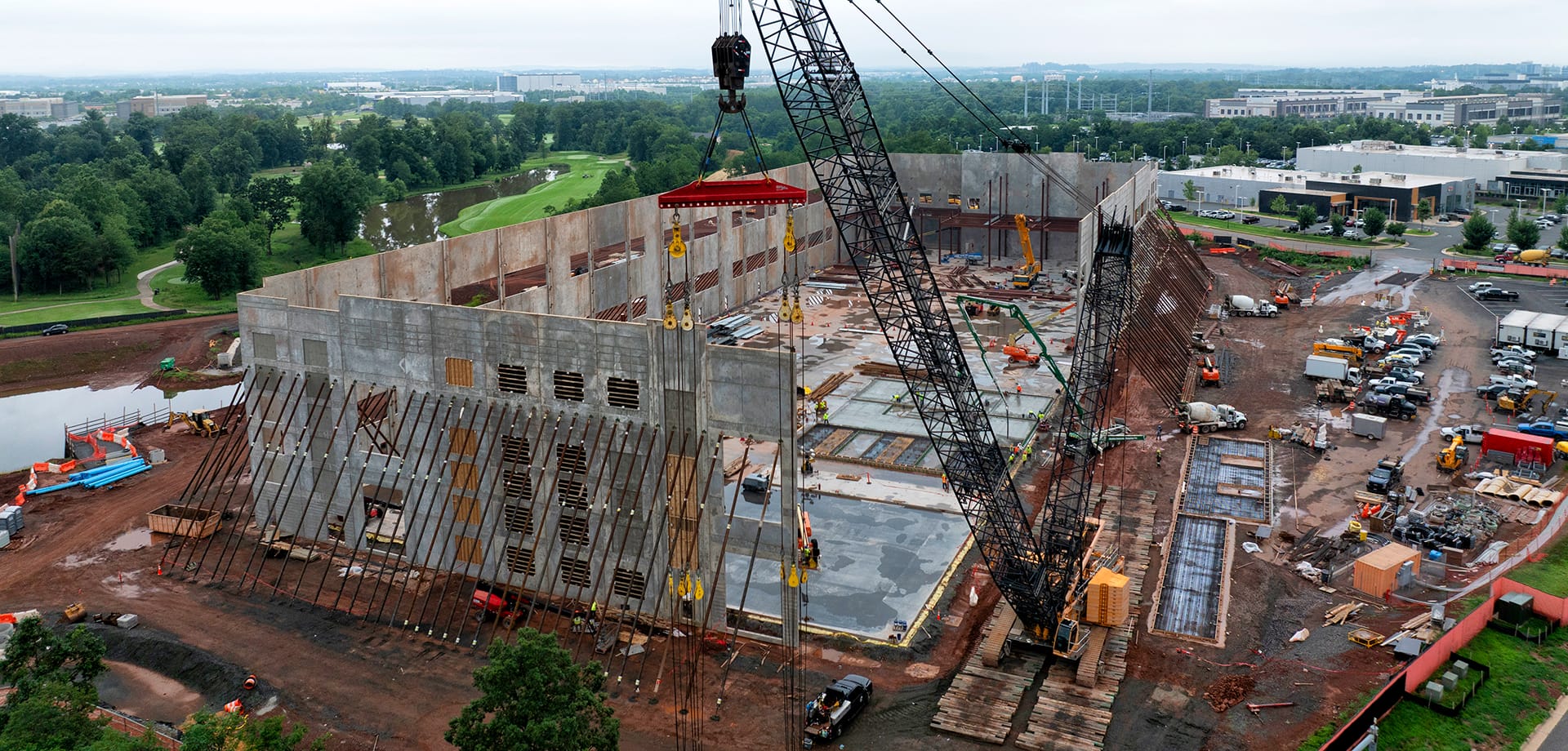
Data center construction projects require careful allocation of cost, schedule, performance and procurement responsibilities. Because data centers are mission-critical facilities with strict uptime and commissioning requirements, delivery structure and contract drafting can directly affect operational readiness and long-term asset value.
The delivery model determines how a data center is designed, procured, constructed and commissioned – and which party bears responsibility for associated cost, schedule and performance issues. For owners, developers and contractors, the choice of delivery structure directly affects timing, financing, procurement strategy and long-term operational performance.
This Q&A compares EPCM and design-build delivery models and explains how construction contracts address delays, cost overruns, commissioning and operational performance obligations.
How Does EPCM Allocate Risk in Data Center Construction?
Under an Engineering, Procurement and Construction Management (EPCM) model, the owner contracts directly with designers, equipment suppliers and trade contractors. Under EPCM, the owner retains direct control over designers, vendors and trade contractors while an EPCM firm coordinates procurement and construction activities.
The EPCM firm manages and coordinates the work but does not assume construction responsibility. EPCM is commonly used on large or fast-evolving data center projects where phased deployment, procurement flexibility or evolving technical requirements are priorities.
EPCM is often attractive to experienced owners and data center developers because it offers:
- Greater control over high-level decisions, design standards and technical criteria
- Flexibility if the scope changes during the project, including vendor and equipment selection
- Direct pricing and contractual relationships with key trades
- Better cost visibility because packages can be bid and tracked separately
That flexibility also shifts more coordination and schedule responsibility to the owner. In an EPCM structure, downsides include:
- Greater owner responsibility for cost overruns arising from design gaps or coordination failures
- Greater exposure to delays involving trade contractor coordination, switchgear procurement and other long-lead equipment
- Requiring a strong internal team with close coordination among designers, vendors and contractors
- No single point of accountability
Without clear contractual allocation of responsibility many procurement, coordination and delay issues ultimately fall back on the owner. As a result, EPCM delivery models require precise contract drafting, active oversight and strong internal project management capabilities.
How Does Design‑Build Allocate Risk in Data Center Construction?
The design‑build delivery model involves the owner hiring one integrated team that shares design and construction responsibility, reducing coordination disputes, minimizing communication gaps and simplifying project management. In practice, this method usually means that one entity coordinates the architect, engineer and contractor functions, allowing design and construction activities to proceed simultaneously rather than sequentially.
From the data center owner’s perspective, design‑build typically provides:
- Single‑point accountability for design integration and construction performance, leading to fewer change orders and faster dispute resolution
- Greater certainty around price and delivery milestones because the team can work toward budget targets earlier in the process
- Clearer accountability and fewer disputes over design responsibility or construction coordination
- Faster project delivery because design and construction overlap
These benefits are particularly valuable on fast‑track projects where speed to market, utility commitments or customer occupancy deadlines are critical. The primary tradeoff is reduced flexibility.
Once the design‑build contract is executed, the following issues may arise:
- The owner will have less control over the project than with more traditional methods
- Changes to performance criteria can be more costly, and it is harder to compare competing design approaches or bids
- Adjustments to power density, redundancy or cooling strategies may trigger pricing and schedule impacts
- Late-stage changes to cooling systems, redundancy requirements or power density can significantly affect pricing and schedule
The design-build delivery method is probably not the best fit for owners that desire detailed design control before construction begins. However, many of these issues can be minimized with clear, upfront definitions of performance expectations, particularly for electrical infrastructure, cooling systems, redundancy standards and commissioning requirements.
How Can Construction Contracts Reduce Cost Overrun Risk in Data Center Projects?
Cost overrun exposure in data center construction is often driven by procurement volatility, schedule compression and evolving technical requirements. Contracts can reduce that uncertainty by clearly allocating pricing, procurement and change-order responsibility.
Common contractual provisions include:
- Incentive structures paired with liquidated damages provisions that allocate savings from cost efficiencies to both parties
- Price adjustment clauses tied to material pricing indices, tariffs or equipment cost increases
- Transparency and audit rights related to procurement assumptions and pricing
- Clearly defined allowance and contingency structures
These provisions are especially important when procuring generators, cooling equipment, switchgear and other long-lead infrastructure components, where supply constraints and pricing volatility remain common.
When structured properly, these provisions can reduce procurement disputes and create better alignment between owners, contractors and suppliers. Addressing these issues early helps minimize uncertainty, avoid delays and reduce the likelihood of disputes once procurement accelerates.
How Are Schedule Risks and Delays Managed in Data Center Construction?
Schedule delays in data center construction can affect customer occupancy, utility commitments, financing obligations and commissioning timelines. These issues can create significant commercial pressure and disrupt operational readiness for mission-critical facilities.
Contracts commonly manage schedule exposure through:
- Identifying long-lead equipment, utility coordination issues and commissioning hurdles early in the project and incorporating buffers where appropriate
- Including milestone-based incentives tied to energization, testing or operational readiness
- Tying liquidated damages to critical-path events rather than general completion milestones
- Establishing cure periods, recovery schedules and dispute-resolution procedures before liquidated damages apply
It is equally important for contracts to define excusable delays within force majeure clauses. Data center contracts often address project-specific delays involving:
- Utility interconnection delays
- Permitting issues or governmental actions
- Supply chain disruptions affecting critical equipment
- Tariffs or material price increases affecting procurement and profitability
- Third-party litigation involving neighboring landowners or stakeholders
Force majeure provisions should always specify that excusable delays must remain outside the reasonable control of the affected party and materially impair performance. Including clear obligations requiring commercially reasonable mitigation efforts is also advisable. Without clear definitions and notice requirements, disputes over excusable delays can quickly escalate in data center construction projects.
Why Are Performance Guarantees Important in Data Center Construction?
Unlike many traditional construction projects, a data center’s value depends heavily on how the facility performs after turnover. As a result, performance guarantees have become essential features of modern data center construction contracts. In addition, incentives, rather than penalties for delays or other issues, are generally more effective because contractors allocate resources early to achieve milestone targets and operational deadlines.
Owners are increasingly requiring guarantees tied to:
- Occupancy, uptime and availability metrics
- Compliance with tier certification or redundancy standards
- Successful integrated systems testing and commissioning
- Required governmental approvals and utility energization
If performance standards are not met, remedies may include corrective work, extended warranties or financial consequences. These provisions help ensure the facility is operationally ready before customer turnover and occupancy while reducing post-completion disputes.
Conclusion
Data center construction risks and delays cannot be eliminated, but they can be managed when delivery choices and contract structures are addressed strategically rather than through generic contract language. EPCM delivery emphasizes flexibility, owner control and direct trade relationships, but it also places greater responsibility on owners for coordination, procurement and schedule management.
Design-build, by contrast, centralizes accountability and can deliver greater price and schedule certainty, particularly on fast-track or hyperscale developments, but it reduces the owner’s ability to make significant late-stage design changes without commercial consequences. Neither structure is universally preferable; the right choice depends on the owner’s internal capabilities, project priorities and risk tolerance.
Successful projects typically align performance standards, procurement obligations and operational milestones with the parties best positioned to manage them. They also give deliberate attention to force majeure provisions, utility coordination, commissioning requirements and energy-efficiency obligations so that responsibility is clearly allocated before procurement accelerates and schedules compress.
By addressing these issues early, owners, developers and contractors can better align incentives, reduce disputes and protect the long-term operational value of the data center asset.