
What to Know
- Floating LNG and FSRUs offer flexible, lower-cost solutions for gas exports and imports in emerging markets.
- Rising LNG supply and shifting demand create both opportunities and oversupply risks globally.
- Energy transition trends and AI-driven power demand may boost LNG growth despite market uncertainty.
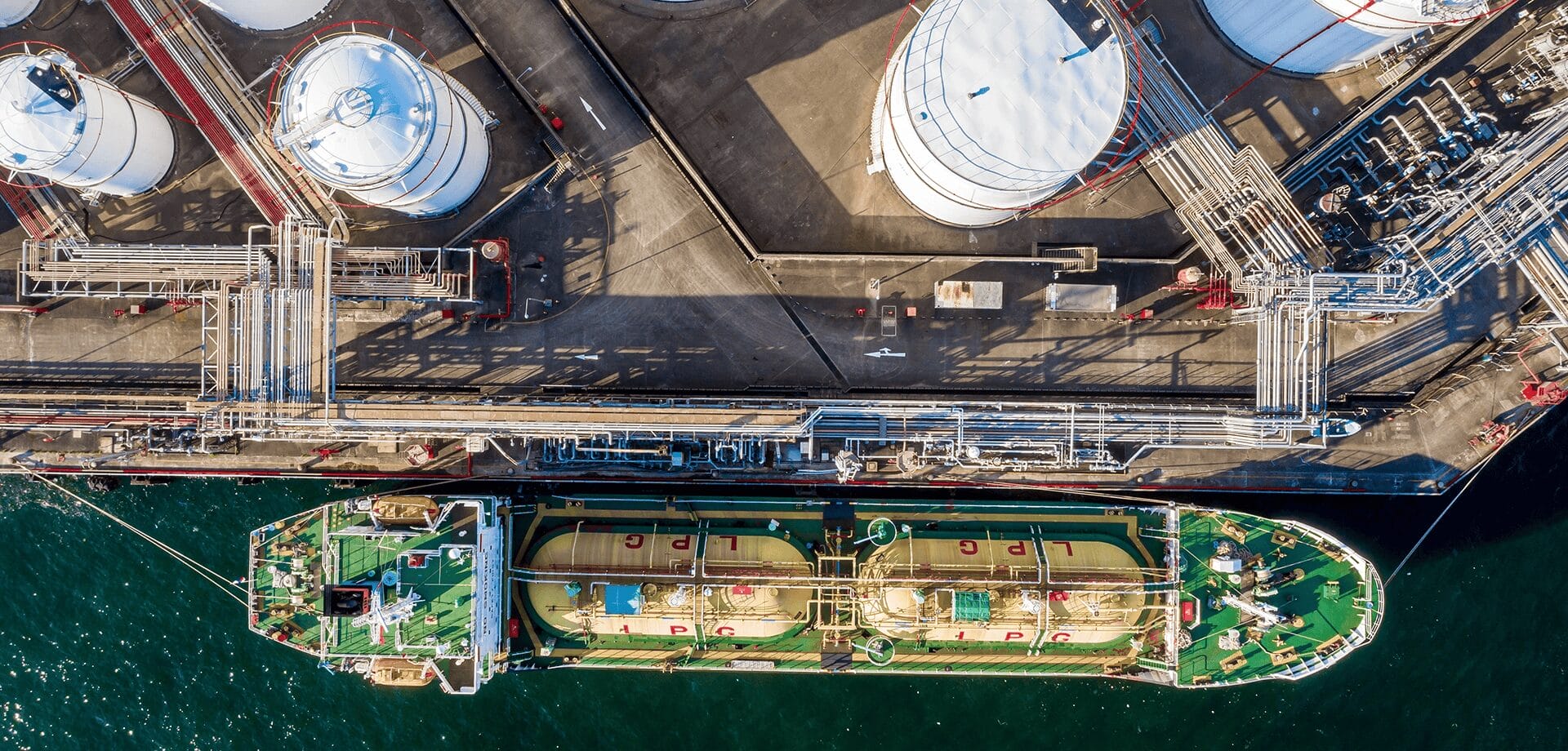
Floating LNG (FLNG) facilities and FSRUs have emerged as transformative components of the global LNG value chain. FLNG facilities, used to liquefy natural gas, offer an opportunity for emerging markets to commercialise gas reserves when onshore liquefaction infrastructure may not be suitable and there are no means to export gas via pipeline. FSRUs, used for importing LNG, are particularly attractive in emerging markets where surging energy demand often coincides with underdeveloped infrastructure, limited financing options, and uncertain regulatory environments. With lower upfront capital requirements, shorter construction lead times, and enhanced deployment flexibility compared with conventional onshore facilities, these floating technologies offer a means to accelerate market participation.
Recent developments in global LNG markets signal a period of transition for liquefaction and regasification technologies. The rapid commissioning of new LNG supply projects in several markets – North America, in particular – combined with anticipated moderation in demand growth across major importing economies may result in a temporary phase of oversupply, although this may be mitigated (or even outweighed) by rising electricity demands, led by power-hungry data centres and artificial intelligence (AI). This landscape creates conditions conducive to innovation and strategic deployment of both FLNG and FSRUs.
Global LNG Supply and Demand Trends
Expansion of Liquefaction Capacity
Global LNG supply has expanded significantly over the past decade. In 2015, total liquefaction capacity stood near 300 million tpy; by 2024, it exceeded 490 million tpy. Projections to 2030 suggest a potential capacity of approximately 740 million tpy, assuming full realisation of announced projects. Figure 1 illustrates this upward trajectory.
According to the International Energy Agency (IEA), more than 200 million tpy of new capacity may enter the market between 2025 – 2030. This expansion has led to heightened discussion about the risk of medium-term oversupply of LNG, particularly if demand in Asia and Europe fails to grow at anticipated rates. Some estimates suggest that by 2030 the market could face a structural surplus of 50 – 70 million tpy, equivalent to around 10% of global demand.
Changing Demand Patterns
However, it is possible that the anticipated LNG oversupply will be partially or even wholly mitigated by upward demand pressures, especially due to LNG’s role as a transition fuel. Until electricity storage, hydrogen, and renewables scale sufficiently, natural gas will continue to play a transitional energy role, filling the intermittency gaps of renewable technologies. In addition, the rapid expansion of AI is anticipated to significantly increase demand for power from data centres, with the IEA forecasting that demand will double by 2030. Separately, LNG is also increasingly being used as a bunker fuel in response to tightening regulations on marine emissions.